Archive for the ‘SNES’ Category
Podcast: DC Bullet
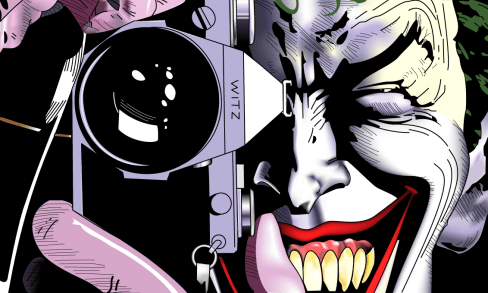
This week Fred and Trees celebrate the release of Injustice: Gods Among Us by discussing old games based on DC comics (which pretty much means Batman and Superman titles). Also remember next week is our game club with Guardian Heroes (Saturn/XBLA).
Title reference: “DC Bullet” is the official logo used by the company from the 80s until recently.
Opening Song: “Superman Theme” from the Famicom title of the same name.
Closing Song: “Boss Theme” from Batman: Return of the Joker on the NES.
Cover Art: “Killing Joke”
For the Love of the Light Gun
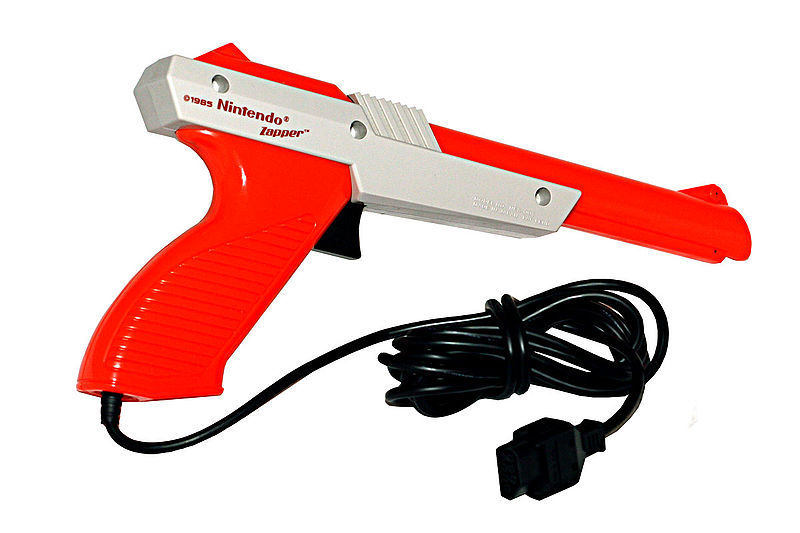 I can’t explain my love for the light gun. It’s one of the oldest forms of interactive entertainment, dating back to the carnival days where you would fire air rifles at a metal bullseye to make an old man’s hat pop up or a dog bark. Once the gun made the transition to video games it honestly became one of the most lifelike and violent gaming tropes throughout history. Not to get deep with it, but you are pointing a gun at a target, usually alive, and shooting it. There is not other gesture like it, you are shooting a modern device to kill something, virtual or not. At the same time it also doubles as the most simple form of proficiency. I don’t think anyone will claim that being good at Duck Hunt or Lethal Enforcers relates to being a good shot in a shooting range, but it’s got a much higher chance of significance than being able to get a headshot in Call of Duty. Whereas the FPS emulates the concept of aiming and firing a gun with 1:1 responses from a controller, a light gun truly simulates the experience.
 Light gun games have been a niche genre, but that doesn’t prevent them from withstanding the test of time and being available on most home consoles and one of the most popular games, even today, in arcades. I guess it’s because despite the maturity implied behind firing a gun, it’s one of the easiest concepts for us to pick up. I’ve been on many adventures thanks to light gun games – whether it’s cleaning up the future in T2: The Arcade Game, battling zombies in a haunted house through House of the Dead, or enjoying some of the worst acting of all time in Mad Dog McCree.
It’s also significant because the light gun is a genre nearly impossible to emulate and doesn’t translate well in today’s technology. While there are exceptions, you will have a hard time playing Crypt Killer properly on a PC running MAME and most HDTV technologies don’t support light guns from the past. Authenticity is as important as the genre itself. This month I’ve decided to dedicate to a timeless style of video game that I always make first priority when buying a new (or old) system: the light gun shooter. Come join me to learn about some of the best, worst, funniest, and definitely weirdest titles to ever grace the hobby of video games. Thanks to my huge CRT television and original hardware, I can even show you videos.
Podcast: Game Club – Chrono Trigger
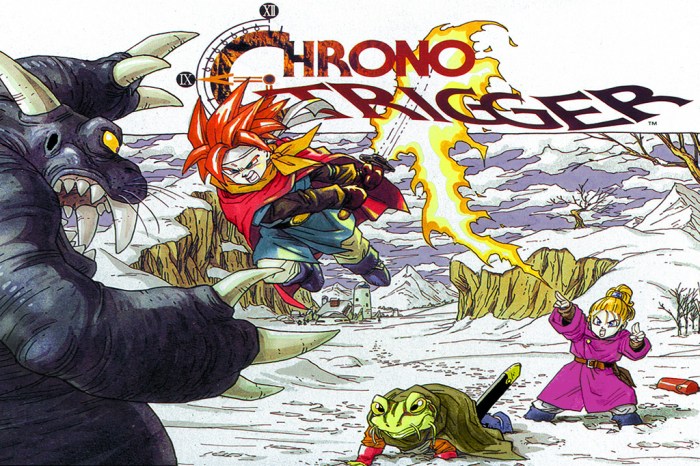
This week we celebrate our game club by discussing the entire plot of Chrono Trigger. We cover the game start to finish, touch on side missions, and discuss the universal ending. We also remind you of January’s game club and pose a question for the game club in February. This show is for those that have previously played Chrono Trigger or would like to hear the plotline in lieu of playing the game.
Buying Guide: Super Nintendo

We all love our retro consoles, but in many cases the consoles we are buying are because they are cheap enough or we have enough money to purchase what we never were able to in our youth. Unfortunately the business of making used retro items available to the masses can at times be a money grubbing market where consumers are deceived by people they will never meet in real life. As an individual who has spent the last decade scouring the local area, conventions, eBay, and the internet as a whole I have learned many valuable lessons. For that reason I present my buying guide series, which is a handy quick guide to knowing what to purchase and what will cost an arm and a leg to replace.
There’s really no denying the popularity of the Super Nintendo Entertainment System (SNES for short). Despite Sega taking a temporary lead over Nintendo in the early 90s, there’s no denying that the SNES was the champion of the 16-bit console generation. This simple machine managed to introduce us to hardcore JRPGs, mode 7 graphics, early polygonal 3D (Starfox), and even faked 3D environments (Donkey Kong Country), all without the multiple add-ons and disc-based media of other consoles at the time. If you’re discouraged in the least by yellowing of the plastic casing for the console, don’t be, it’s a mere chemical reaction with age and actually speaks to the durability of the product. On that same note it’s pretty doubtful that you would need a buyers guide for the SNES as just like most other Nintendo consoles there are few parts, but all the same here’s what you will definitely need:
Review: Final Fight CD (Sega CD)
 Console: Sega-CD/Mega-CD
Released: 1993
Developer: Capcom
Publisher: Sega (Sega/Mega-CD, 32X CD)
Instruction Manual: Not necessary
Difficulty: Hard
Played it as a child? Yes
Value: $21.50 (used) $76.00 (new) (pricecharting.com) – Price for Sega CD version only
Price: $23-$60 (used) N/A on US Version (new) on eBay
Other Releases: Arcade, SNES, Gameboy Advance
Digital Release? Yes – SNES version on Virtual Console ($8), Arcade version on XBLA/PSN as Double Impact ($10)
Final Fight is a pivotal late 80s arcade release for Capcom for two reasons: it established the norms that would make up the concept of the “beat-em-up” genre for its short-lived life (although it oddly enough didn’t introduce any of them) and it created the aesthetic and building blocks of Street Fighter II. Anyone who has played this game or SFII will immediately be familiar with that semi-realistic semi-animated graphical style of Final Fight that remained exclusive to these two titles moving forward for a few sequels (I’m considering the numerous re-hashes of SFII to be sequels). In full disclosure this is my favorite brawler of all time and definitely ranks highly in my overall top games I’ve ever played despite the fact that Final Fight doesn’t translate well to home consoles because it’s intended to take your money and prompt more quarters rather than be completed in a finite number of lives/credits. In order to complete the game in the allotted five credits requires you to memorize the cheaper boss battles and exploit the collision detection. For me it was just repetitive stupid fun.
Review: Super Castlevania IV (SNES)
 Console: Super Nintendo Entertainment System (SNES)
Released: 1991
Developer: Konami
Publisher: Konami
Super Famicom? Yes (as Akumajo Dracula – English Translation: Dracula’s Castle)
Instruction Manual: Not necessary – Link
Difficulty: Mild
Played it as a child? No
Value: $22.79 (used) $189.95 (new) (pricecharting.com)
Price: $20-$30 (used) $150.00 (new) and $500 for first edition (v-seam) on eBay
Digital Release? Yes – Virtual Console – $8.00
 It’s pretty much understood that Super Castlevania IV is merely a remake of the original Castlevania, however for many reasons it is a significant game in its own right. In Japan the game held almost the same name as the original (Akumajo Dracula) and in the lore and instruction manual in Japan it literally has the same plot. For the US release, Konami attached the “IV” as well as giving a slightly different story that suggests the events of this game take place immediately following the second game, Simon’s Quest. Even though both the developers and the fans agree it’s not a sequel, the two games have little in common with one another. While it’s a cool experiment with many gameplay characteristics, some that would never return and others became series staples, Super Castlevania IV was also a flagship title for the SNES to show off all the things the various modes (including the overhyped Mode 7) could do to a game. Think of it as a fleshed out action platformer tech demo that was far more interesting in retrospect than Pilotwings.
Now & Then: Mortal Kombat II (Midway)

Midway must have known it had a hit on its hands with the original Mortal Kombat because no time was wasted creating the sequel. While most of us anticipated the home release of the first title, Mortal Kombat II (MKII) snuck into arcades and blew our minds. This game literally had it all – more characters, more fatalities/finishing moves, and more violence. For most MK series fans, myself included, this is considered to be the best and it’s one of the highest grossing video games of all time.
MK Meets its Match
The original Mortal Kombat was an impressive fighter, especially for one that was developed with digitized actors in only 10 months, but creator Ed Boon wanted to do more. “[MKII] had everything we wanted to put in the original MK but didn’t have time for,” he said in an interview with EGM2 (issue 5, Nov. 1994). It does seem like there’s some truth to his claim, especially with the introduction of more stage fatalities, a second fatality for each character, and even joke finishers “friendships” and “babalities”. I’m not so sure the roster was an initial idea, nor was the background concepts of Outworld, but I can definitely see the Midway team wanting to break away from the perceived reality of the original. Not only was MKII the definitive version of the original concept, but it continues to be the template for which all other titles in the series are based on.
Now & Then: Mortal Kombat (Midway)
Last week Mortal Kombat released for the Playstation Vita and while I was playing it for review I couldn’t help but notice that the series has not changed much since it first released. Normally this is a bad thing, but in the case of this series its strength relies on its simplicity. Mortal Kombat is a game all about beating the crap out of your opponent and then topping it all off with a finishing move that is extremely violent in nature.

First Impressions
I still remember the day that I saw the first Mortal Kombat arcade out in the wild. It was 1992, I was 10 and frequented the local roller rink where I could meet up with friends and play arcade games. Yeah, even in 1992 the roller rink was still alive and well in Chicago’s northern suburbs. At that time the arcade was dominated by Street Fighter II, a cartoon-like fighter from the geniuses at Capcom, but I wasn’t all that good at it and truthfully had little interest in fighters. That is, until I walked in and saw a new game that prominantly displayed the title “Mortal Kombat” in bright yellow letters. My first thought was how stupid it was that the word “combat” was misspelled, but then I noticed that the game used digitized realistic looking actors. Even more impressive was when the first uppercut made contact and a shower of blood erupted from the opponent’s face. I was intrigued.
 Gaming History 101