Posts Tagged ‘resident evil’
Retrospective: Resident Evil 4
Now & Then is different from both a retrospective and a review. It tackles games you probably already know and is a place for gamers to discuss these games. Below is an overview of a game’s presence in the market then and now. Authors of these articles share their personal experience, so we encourage all of you to do the same in the comments.
Editor’s Note: Although I love classic games as much as the next guy, few games get to be restored as often as Resident Evil 4. Therefore, the recently released Ultimate HD Edition has the most cleaned up, 1080p native graphics to date and thanks to screenshot technology being what it is we were able to grab those assets directly from the game without any quality loss. We at GH101 have decided to feature screens from this version in the interest of clarity, despite the fact that they do not faithfully represent the graphical fidelity of the many previous versions. Hopefully purists will forgive us.
The Story of the Scrapped Versions
 Whenever a game sits in development hell for too long, it has an adverse affect on everyone’s feelings for the game. The examples are too many to count but a couple quick mentions are the likes of Diakatana, Too Human, and of course Duke Nukem Forever. With a few exceptions, games that take too long to make can’t help but not live up to the hype and therefore disappoint an all-too-eager audience. One of these exceptions is Resident Evil 4. Originally announced in 1999, the concept was a Playstation 2 game with a brutally strong protagonist that was more action focused per the ongoing desires of Shinji Mikami (series creator that has been trying to go more action oriented since Resident Evil 2). This new iteration was appropriately tasked to Hideki Kamiya, notable for his director work on Resident Evil 2, and in connection with Noboru Sugimura, writer of Resident Evil 2. After a European trip that netted a Gothic art style and given the goals of the game it was decided that the camera would have to be dynamic and movable (much like Capcom had started in Dino Crisis) and thus ditch the traditional pre-rendered background in exchange for a fully rendered world. Much of the development style, tone, and even Kamiya’s direction involved a what was described as a “cool” world and eventually it got so far removed from the roots of both the survival horror genre and Resident Evil series and instead integrated demons and a new protagonist, Dante. A small fraction of the Capcom Production Studio 4, named Little Devils, converted this new concept with the juggling bug this team had seen in Onimusha: Warlords and eventually renamed the project to Devil May Cry in November 2000. While it spun off to a good game and an ongoing franchise that still lives today, Devil May Cry left Resident Evil 4 in a rut without a dev team (and some hardcore RE fans still refer to the game as Resident Evil 3.5 since the core concepts remained intact).
Podcast: What Did You Expect?

This week Fred and Jam are joined by guest Fortengard to talk about the world of video game movies. Now, if we just sat around and ragged on them all day we would be just like every other gaming podcast. Instead, we delve into concepts of production, adaptation, and what makes these movies good or what makes them completely worthless.
Note: I promised to post the chat for this show as well, you can find it here (.doc version).
Version: Resident Evil Intro Movies
In this episode of Version, we dissect the different intro movies found in the original Resident Evil. It was heavily altered in the US versions so we hunted down a Japanese version to compare the difference and even included the Gamecube remake for posterity.
Retro Game Night: RE Gun Survivor 2 and Michigan
For this week’s video and Retro Game Night we are playing requested titles Biohazard (Resident Evil) Gun Survivor 2 (Japanese Version) and Michigan: Report from Hell (European English Version). Both titles only released in Japan and Europe so here they are in all your viewing glory. Michigan is a complete let’s play series. Due to language and violence both of the games and the commentary, viewer discretion is advised.
Podcast: Silent Evil

This week Fred is joined by listeners Allen and Jamalais to discuss the Resident Evil and Silent Hill franchises. They do not get as far as planned, but the initial iterations of each series is thoroughly covered and a sequel is promised.
Extra Credit: Resident Evil Series
Back before Gaming History 101 was a thing, Fred made a solo podcast about the Resident Evil series and it was shockingly less than an hour long.
Podcast: The History of Survival Horror

This week Fred discusses the origins of the survival horror genre.
Podcast: The Final Countdown Pt. 1
Fred Rojas from Gaming History 101 and the B-Team podcast is joined by Josh “Colm” from the T4 show and Rob “Trees” from EZ Mode Unlocked to discuss the games in G4’s recent top 100 games of all times. We start by discussing some of our issues with the games in the list and then hit the ground running talking about our personal experiences with many of the great games on the countdown. Due to time constraints this first part covers games 100-60 with more to come in future weeks. Check it out!
Day 3
On the 3rd day of Christmas my memories gave to me…
Three New Consoles


When you look up the Playstation 2 in either gaming history books or Wikipedia, you’ll notice a late 2000 release date that seems to suggest the PS2 had a year head start on the Gamecube and Xbox. What they won’t tell you was that those who experienced its release in person knew better than to even suggest the PS2 was on store shelves in 2000. In fact, it took until about holiday season 2001 for PS2s to reappear at retail and have a few decent games. This resulted in the first time all consoles of a specific generation were initially available together, despite release dates. Christmas 2001 was a wild cluster and there we were wrapped up in it and trying to presume which console would be the best.
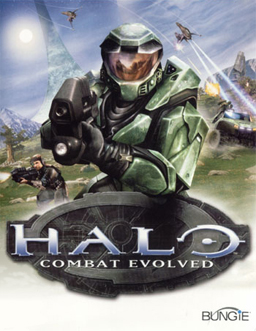
Ironically this generation would end up with all three consoles having similar libraries save for the Gamecube versions of games being mildly stripped. Given the scant launch selection, it really came down to what you thought the console could offer in the future. Nintendo and Sony touted the strength of their first party titles while Microsoft had only one ace in the hole: Halo. Debates among my friends waged for days, fanboys coming out of the woodwork and fighting with everyone because they didn’t agree on which console was worth it. The only reason everyone cared what their friends were buying was because the college atmosphere thrived on borrowing your friends’ games and for the first time there was a lot of variety.

In the end the Gamecube remained the outlier with its cheaper price tag, lack of a DVD player and no true Mario game in sight. Of course I decided to ask my parents for it because it fit within the budget of a Christmas present and it was going to be the home of a Resident Evil remake and future series titles. Although the PS2 clearly won the overall generation by a landslide, it was a pretty split world on college campuses. Sure, you could play your old Playstation library and watch DVDs, but the Xbox allowed for Halo LAN parties. In true hindsight, Halo aside, there was very little difference between each console. With simultaneous launch windows being the ideal situation for competition, all that resulted was overall conformity within each console. Funny, isn’t it?
Generation Gap Pt 5: “Last” Gen
This installment will conclude our Generation Gap coverage. Please note that upcoming coverage on handhelds, arcades and microcomputers will follow. A lot happened just over a decade ago – the gaming market changed and one strong competitor bowed out as another took to the plate.
Fifth Generation – 1999 – Present (technically)

Sega Dreamcast – Launch Price: $199.99 – Released: 1999
Launch dates are getting more technical by this time, so from a Japanese standpoint the Dreamcast was a 1998 launch but we didn’t get it here until much later in September 1999. Although it is a 128-bit system, consoles had stopped toting the strength of “bits” and instead focused on a sleek design – most likely because Sony did it with Playstation and it worked. Dreamcast was Sega’s final nail before bowing out of hardware manufacturing and has been argued to also be its best offering. Regardless, the Dreamcast was definitely ahead of its time. It featured things that no console would dare launch without today and basically had the same features that Microsoft would include in its console just a few years later. A few years, that’s the difference between success and failure.
Until the Dreamcast most video game consoles were specified hardware that was far behind PCs. By all accounts the Dreamcast was a simplified PC, even running Windows CE, a modified version of the operating system that would be put to greater use on later pocket PCs. The Dreamcast had a built-in modem on all consoles, which supported the earliest form of online console gaming and provided a web browser service to those fortunate or rich enough to afford the high cost of long phone calls. Furthermore a keyboard attachment allowed players to truly use their console as an Internet device and even gave way to early MMOs on the console. Memory cards included LCD dot matrix screens and were called “visual memory units” or VMUs that not only held data but gave the player on-the-go mini games and Gigapet-style games. Aside from that Dreamcast boasted higher storage with the proprietary GD-rom format (1.2 GB of storage space), impressive graphics, and a slew of solid titles.
 Gaming History 101